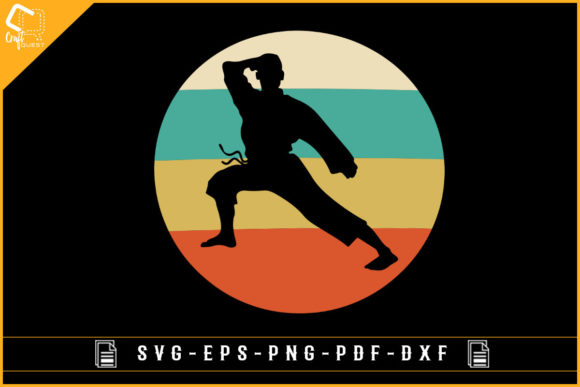
Vintage Retro Martial Art T-shirt Design
When I first opened the files for the Vintage Retro Martial Art T-shirt Design, my immediate reaction wasn't about the file formats or the technical specs. It was about the mood. There is a specific energy in retro graphics that speaks to nostalgia, discipline, and raw movement. As someone who has stitched hundreds of designs for clients ranging from local martial arts dojos to boutique lifestyle shops, I know that finding a design with genuine character can be a challenge. This silhouette-based artwork hits that sweet spot between classic aesthetics and modern craft utility.
The visual personality here is bold yet understated. The silhouette captures the essence of a fighter in motion without getting bogged down in unnecessary facial features or cluttered backgrounds. For an embroidery designer, this is gold. It suggests a design that relies on strong outlines and confident fill stitches rather than delicate, tiny details that might get lost in the fabric weave. It feels like something you would want to see on a worn-in hoodie at a black belt ceremony or perhaps embroidered onto a high-quality tote bag for a gym enthusiast.
Real-World Application: From Digital File to Finished Product
Let's talk about how this actually performs when it leaves the screen and enters the hoop. I recently considered using this embroidery file for a custom order: a set of personalized aprons for a small business owner who runs a home bakery but also coaches kids' karate classes. The client wanted something that bridged her two worlds—professional kitchen gear with a nod to her passion outside the kitchen.
The Vintage Retro Martial Art T-shirt Design fit perfectly. Because the design is primarily a silhouette, it translates beautifully onto the heavy cotton canvas of an apron. When I ran a test stitch, the satin stitch along the outer edges of the figure provided a crisp definition that stood out against the fabric texture. The fill stitch areas were dense enough to create a solid block of color without creating a stiff, cardboard-like feel that often plagues larger designs on soft garments.
This versatility makes it an excellent candidate for various handmade products. Imagine this design on a baby onesie for a future little champion, or perhaps as a patch on a denim jacket. The retro aesthetic gives it a timeless quality that doesn't date quickly, which is crucial for Etsy sellers and small shop owners looking to build a lasting brand identity. Customers are drawn to designs that look intentional and curated, not generic. This piece offers that sense of curation immediately.
Where This Design Shines
- Custom Apparel: It works exceptionally well on sweatshirts and t-shirts where the retro vibe complements the casual nature of the garment. The silhouette allows for creative placement, whether centered on the chest or running down the back of a hoodie.
- Tote Bag Designs: The clean lines of the martial artist silhouette are perfect for tote bag design projects. The high contrast needed for embroidery pops nicely on canvas bags, making it a great value-add item for craft fairs.
- Embroidered Patches: If you have the capability to make patches, this design is ideal. The distinct shape means it can be easily outlined with a border, creating a professional-grade badge for jackets or caps.
- Holiday and Personalized Gifts: For holiday embroidery projects targeting martial arts instructors or students, this design serves as a thoughtful, non-cluttered gift option. It feels personal without being overly sentimental.
Navigating Technical Challenges and Fabric Choices
While the design is strong, no single pattern fits every scenario. As a reviewer, I need to point out where caution is required. The Vintage Retro Martial Art T-shirt Design relies heavily on the integrity of its lines. If you attempt to digitize or use this on a very small hoop size, you risk losing the definition of the limbs and posture. The silhouette needs space to breathe.
Fabric selection is equally critical. On stretchy fabrics like thin jersey or loose-knit t-shirts, you must be meticulous with your stabilizer choices. Without proper backing, the tension of the running stitch and fill stitch could cause the fabric to pucker, distorting the graceful lines of the martial artist. Dark fabrics present another consideration; while the retro style often implies dark backgrounds, ensure your thread colors offer sufficient contrast. A black silhouette on a navy shirt might disappear, whereas a cream or gold thread on black would pop beautifully.
I also advise against placing this design on curved surfaces like baseball caps unless you have significant experience with 5-panel or curved hoop setups. While possible, the perspective of a standing martial artist can sometimes look odd if the curvature of the hat warps the stance too much. Flat surfaces like pillow covers, tea towels, and flat-fronted hats are where this design truly excels.
Professional Notes for the Embroidery Designer
Before you commit this design to a commercial project or a customer's prized possession, there are a few practical steps to take. First and foremost, always test the design on scrap fabric. This isn't just about checking the stitch count; it's about seeing how the thread colors interact with the specific weave of your chosen material. The retro aesthetic often benefits from slightly muted or vintage-colored threads rather than neon brights, so experiment with your palette.
Check the stitch density carefully. If the original digitization has too much density, the design will feel heavy and difficult to stitch through multiple layers of fabric. Conversely, if it is too sparse, the embroidery project may lack the solidity expected of a martial arts motif. Review the small details in the corners of the silhouette; these are often the first places to fray or lose definition after washing.
If you are planning to sell finished items made with this design, confirm the licensing terms explicitly. Some digital assets allow for personal use only, while others permit commercial production of physical goods. Since this is categorized under Graphics and Crafts, it likely includes vector files like SVG and EPS, which are fantastic for vinyl cutting, but ensure you understand the boundaries for machine embroidery usage. Always inspect the design in black and white mockups to verify that the shape holds up without relying on color alone.
Final Thoughts on Visual Appeal and Value
In the world of commercial embroidery and design assets, trust is built on consistency and quality. The Vintage Retro Martial Art T-shirt Design contributes positively to both. Its clean lines and nostalgic theme suggest a level of professionalism that enhances the perceived value of the finished product. Whether it ends up on a nursery wall decor item, a boutique branding label, or a custom gift for a wedding party, the design carries a weight of authenticity.
For the creative entrepreneur, this design is more than just a picture; it is a tool for storytelling. It tells a story of discipline, history, and action. By choosing this design, you are aligning your handmade products with those values. Just remember to respect the technical limitations of embroidery, choose your materials wisely, and always prioritize the stability of the final stitch. When done right, the result is a finished product that customers will cherish, wear, and display with pride.